Best Financial Close Automation Software in 2026: Reviews, Pricing & Comparisons
Best Financial Close Automation Software in 2026: Reviews, Pricing & Comparisons
An independent, practitioner-grade evaluation of seven financial close automation platforms — reviewed across AI capabilities, ERP integration, workflow depth, audit readiness, and total cost of ownership.
- Executive Summary
- Introduction
- Comparison Table
- How We Evaluated These Solutions
- Individual Platform Reviews (7 platforms)
- Pricing Comparison
- ERP Integration Comparison
- Best Solutions by Company Size
- Implementation Considerations
- Governance Considerations
- Common Buying Mistakes
- Frequently Asked Questions
- Final Recommendations
Executive Summary
7 Platforms at a Glance
- FloQast — The most widely adopted close management platform in mid-market finance, built by accountants for accountants. Best-in-class workflow checklists, reconciliation management, and a user experience that drives genuine adoption without IT involvement.
- BlackLine — The enterprise standard for financial close automation. Unmatched depth in reconciliation, intercompany, and journal entry controls. The right choice for large, complex, multi-entity environments with serious compliance mandates.
- Numeric — The modern, AI-native challenger purpose-built for high-growth companies. Exceptional user experience, fast implementation, and AI-assisted task management. Best for Series B–D companies that want to move fast without sacrificing control.
- Trintech — A comprehensive close-to-disclose platform with deep controls, strong reconciliation automation, and multi-currency/multi-entity support. The close peer to BlackLine for enterprise buyers who want competitive pricing and a proven implementation track record.
- Adra by Trintech — The mid-market version of Trintech’s enterprise platform. Strong reconciliation and task management at a price point accessible to companies between $50M–$500M in revenue. Underrated and frequently overlooked in evaluations.
- Planful — A financial performance management platform with a close module that integrates tightly with its FP&A and reporting capabilities. Best for companies that want close automation as part of a unified financial planning and reporting stack.
- Workiva — The compliance and reporting leader. Dominant in SEC reporting, SOX compliance, and ESG disclosure workflows. Its close management capabilities are strong but best understood as an extension of its reporting infrastructure rather than a standalone close platform.
The financial close is the single most consequential recurring process in any finance organization. Every month, quarter, and year-end, finance teams race against hard deadlines to reconcile accounts, post journal entries, review intercompany transactions, and certify financials — often while managing thousands of manual tasks across disconnected spreadsheets and shared drives. The cost of this friction is not just operational: it is strategic. Finance leaders who spend the final week of every month buried in close management have less time for analysis, less visibility into business performance, and higher audit risk than those running automated, controlled close processes.
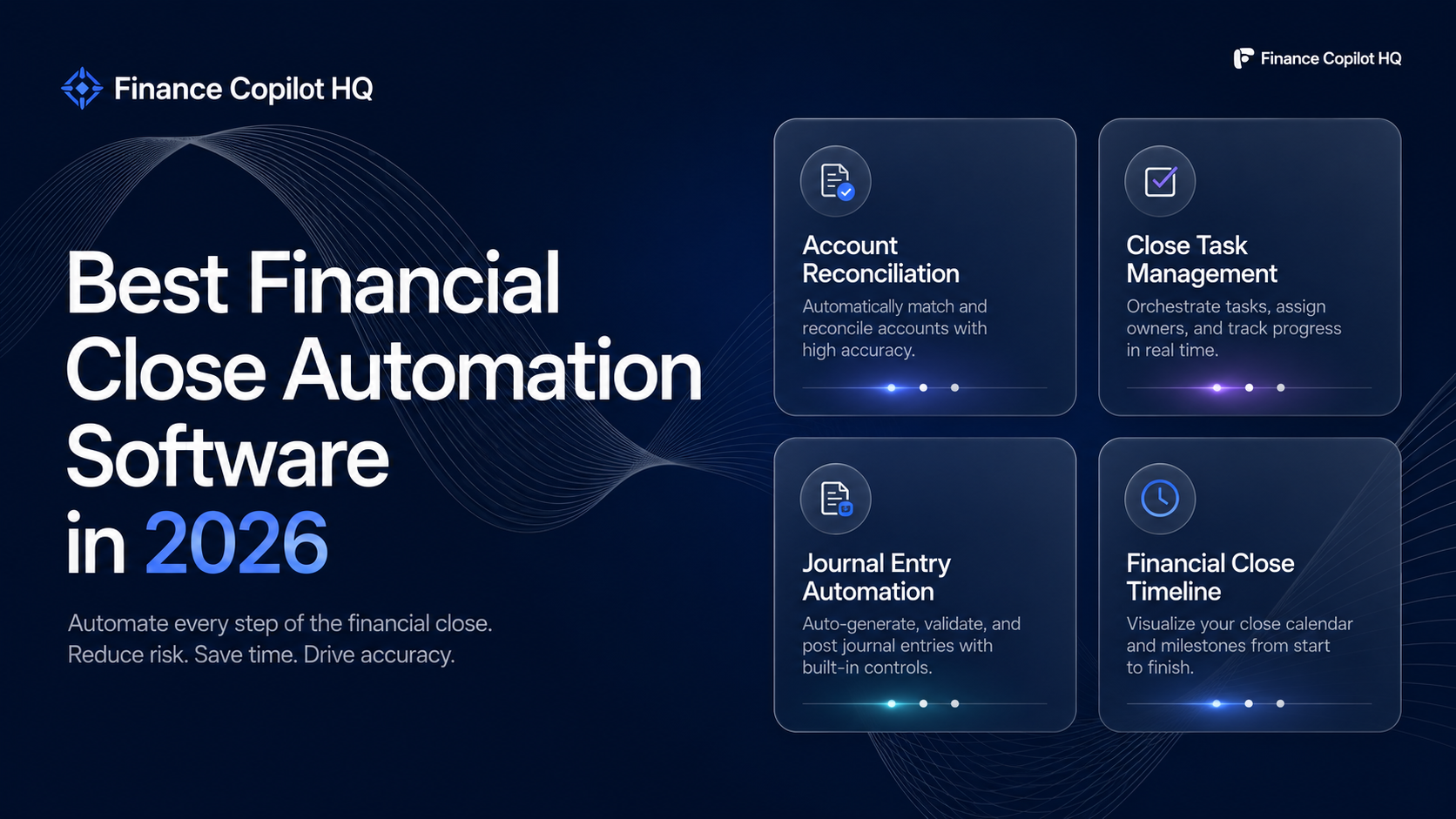
Financial close automation software addresses this problem directly. The best platforms replace the spreadsheet-driven close with structured task management, automated reconciliations, AI-assisted anomaly detection, and audit-ready documentation — cutting close cycle time, reducing errors, and giving controllers and CFOs real-time visibility into where the close stands. The market has matured rapidly since 2020, and the gap between leading platforms and the rest has widened significantly as AI capabilities have been layered onto what were previously workflow-and-checklist tools.
This guide evaluates seven of the most widely deployed financial close automation software platforms against a consistent framework designed for the people who actually make these decisions: CFOs, Controllers, and Finance Transformation Leaders. We evaluated FloQast, BlackLine, Numeric, Trintech, Adra, Planful, and Workiva across eight dimensions that matter most in a real buying decision. If you want to understand which tools actually accelerate your close, reduce audit risk, and build a scalable finance operations infrastructure, keep reading.
Best AI Tools for Finance Teams · ChatGPT for Finance Teams · AI for Accounts Payable Automation · Best AP Automation Software
Quick Comparison
Financial Close Software Comparison Table
| Platform | Best For | Starting Price | AI Features | Reconciliation | Multi-Entity | ERP Sync | G2 Score |
|---|---|---|---|---|---|---|---|
| FloQast | Mid-market, accounting-led teams | Custom (est. $1,200–$3,000/mo) | ✓ AI-assisted | ✓ Strong | ✓ Yes | ✓ Major ERPs | 4.7/5 |
| BlackLine | Enterprise, SOX, multi-entity | Custom (est. $3,000+/mo) | ✓ AI matching | ✓ Best-in-class | ✓ Strong | ✓ Native SAP/Oracle | 4.3/5 |
| Numeric | High-growth, VC-backed companies | Custom (est. $800–$2,000/mo) | ✓ AI-native | ✓ Good | ⚠ Limited | ✓ Modern ERPs | 4.9/5 |
| Trintech | Enterprise, complex compliance | Custom (est. $2,500+/mo) | ✓ AI matching | ✓ Enterprise-grade | ✓ Strong | ✓ SAP, Oracle, MS | 4.2/5 |
| Adra | Mid-market ($50M–$500M revenue) | Custom (est. $800–$2,000/mo) | ⚠ Basic | ✓ Strong | ✓ Good | ✓ Major ERPs | 4.4/5 |
| Planful | FP&A-integrated close management | Custom (est. $1,500–$4,000/mo) | ✓ AI insights | ⚠ Moderate | ✓ Yes | ✓ Major ERPs | 4.3/5 |
| Workiva | Public companies, SEC/SOX/ESG | Custom (est. $3,000+/mo) | ✓ AI drafting | ⚠ Moderate | ✓ Strong | ✓ Major ERPs | 4.4/5 |
Evaluation Framework
How We Evaluated These Solutions
Our scoring framework weighted eight dimensions that matter most to controllers and finance transformation leaders making a real purchasing decision. We did not rely solely on vendor-provided demonstrations or marketing materials. Our evaluation drew on user reviews from G2, Capterra, and TrustRadius; published implementation case studies; interviews with controllers and finance operations leaders; and hands-on product research conducted between Q1 2025 and Q2 2026.
The eight dimensions we scored were: Close workflow and task management (structured checklists, dependencies, deadline tracking, status visibility); Reconciliation automation (matching logic, exception handling, auto-certification thresholds); AI and machine learning depth (genuine intelligence vs. rule-based automation dressed as AI); ERP integration quality (bi-directional sync, GL mapping reliability, real-time data refresh); Audit readiness and controls (audit trail completeness, SOX workflow support, certification documentation); Multi-entity and multi-currency support (consolidation workflows, intercompany elimination, FX handling); Implementation speed and IT dependency (time-to-value, consultant requirements, ongoing maintenance); and Total cost of ownership (license fees, implementation services, annual support, hidden costs).
We deliberately excluded platforms designed exclusively for very small businesses (under $10M ARR) or single-country deployments. Every platform in this guide is a viable choice for a finance team conducting a serious evaluation in 2026.
Platform Reviews
Individual Platform Reviews
1. FloQast — Best Close Management Platform for Mid-Market Finance Teams
FloQast is the dominant close management platform in the mid-market and has built its position through a relentless focus on the accountant experience. Unlike enterprise platforms that layer close management onto broader financial process suites, FloQast was purpose-built for the close — and that focus shows in every design decision. The platform integrates directly with your ERP and pulls trial balance data to drive reconciliation workflows, giving teams real-time visibility into which accounts are tied, which tasks are overdue, and which reviewers are holding up the close.
The platform’s reconciliation engine supports automated matching against bank statements, sub-ledgers, and third-party data sources, with configurable auto-certification thresholds that allow low-risk accounts to close without manual review. Its AI assistant, Copilot, helps surface anomalies, flag unusual fluctuations against prior periods, and prioritize where accountants should focus their attention. The 2025 release of FloQast’s AI-powered flux analysis significantly reduced the time finance teams spend explaining variance drivers — a task that previously consumed hours of manual spreadsheet work every close cycle.
FloQast’s user adoption rates are consistently the highest in the category. Its interface is intuitive enough that most accountants are productive within days of go-live, and its mobile app provides approvers with real-time close status and one-tap sign-offs. This is not a minor convenience: approval bottlenecks are one of the most common causes of close delays, and FloQast’s mobile UX directly addresses the problem of senior reviewers who are not sitting at their desks during the final days of close.
Finance Operator InsightFloQast implementations consistently go live faster than any other enterprise close platform — most mid-market deployments are fully operational within 4–8 weeks. The key variable is GL mapping quality: teams that invest time upfront in mapping their chart of accounts to FloQast’s reconciliation framework see dramatically faster time-to-value than those who defer this work. If you are running a pilot, map your top 20 highest-volume account groups before kickoff.
Governance NoteFloQast’s reviewer certification workflow creates a complete, timestamped audit trail of every close task — who prepared it, who reviewed it, when each step was completed, and what supporting documentation was attached. For SOX-compliant environments, this replaces the email chains and shared spreadsheets that auditors spend hours reconstructing. Ensure your auto-certification thresholds are documented and reviewed at least quarterly — thresholds set during implementation may not reflect current materiality levels.
Best for: Mid-market companies (100–2,000 employees) looking for fast implementation, high user adoption, and strong reconciliation automation without heavy IT dependency. Particularly strong for teams currently running their close on spreadsheets who want a significant quality improvement without enterprise procurement complexity.
Watch out for: FloQast’s multi-entity consolidation capabilities, while improved, are not at the same level as BlackLine or Trintech for very complex holding company structures. If you have 20+ entities with significant intercompany transaction volume, evaluate the consolidation workflow carefully before committing.
2. BlackLine — The Enterprise Standard for Financial Close Automation
BlackLine is the category-defining platform for enterprise financial close automation and has been the benchmark against which all other platforms are measured for over two decades. Its core products — Account Reconciliations, Task Management, Intercompany Hub, Journal Entry, and Financial Reporting Analytics — address every phase of the financial close with a depth that no other vendor currently matches at scale. BlackLine’s client base reads like a Fortune 1000 list, and its implementation track record in complex, multi-entity, multi-GAAP environments is unmatched in the category.
The platform’s reconciliation engine uses AI-powered transaction matching that processes millions of transactions across accounts, currencies, and entities with configurable rules and exception workflows. Its intercompany hub automates the matching, netting, and settlement of intercompany transactions — one of the most painful and error-prone aspects of the close for multi-entity companies. BlackLine’s Journal Entry module enforces preparer/reviewer segregation of duty controls with full documentation requirements, satisfying even the most demanding SOX audit requirements. The 2025 launch of BlackLine’s AI Risk Score, which ranks reconciliations by their likelihood of containing errors based on historical patterns, represents a meaningful advance in AI-assisted close management.
BlackLine’s native SAP integration is the deepest in the category — a significant differentiator for the large portion of enterprise buyers running SAP S/4HANA as their ERP. The platform can pull real-time trial balance data directly from SAP without middleware, enabling automated reconciliation matching that runs continuously rather than at point-in-time snapshots. For Oracle Fusion and Microsoft Dynamics 365 environments, the integration is strong but relies on more traditional API connectivity rather than the native SAP architecture.
Finance Operator InsightBlackLine implementations require more organizational investment than any other platform in this comparison. A mid-market company implementing BlackLine for the first time should budget 6–12 months for full deployment, and most organizations benefit from a certified BlackLine implementation partner rather than attempting a self-directed rollout. The configuration complexity is significant, but teams that invest in proper setup typically achieve 30–40% reductions in close cycle time within 18 months. Budget for change management: BlackLine changes how accountants work, and adoption without enablement investment is a common failure mode.
Governance NoteBlackLine’s SOX compliance infrastructure is the most robust in the category. Its preparer/reviewer/approver workflow enforces three-level sign-off on high-risk reconciliations, with mandatory supporting documentation and immutable audit trails. The platform’s controls framework supports PCAOB, IFRS, and US GAAP environments simultaneously, making it the default choice for companies with multiple reporting standards. If your company is publicly traded or approaching IPO, BlackLine’s controls architecture will satisfy external auditors who are increasingly familiar with the platform’s audit trail format.
Best for: Large enterprises ($1B+ revenue), public companies, PE-backed businesses preparing for IPO, and multi-national organizations with complex intercompany, multi-currency, and multi-GAAP reporting requirements. The definitive choice when compliance depth and reconciliation scale are the primary criteria.
Watch out for: Implementation cost and timeline are consistently higher than vendor sales estimates. Total cost of ownership in year one frequently includes 1.5–2x the annual license cost in implementation services and internal resource time. Negotiate implementation support commitments and milestone-based payments into your contract before signing.
3. Numeric — The AI-Native Challenger Built for High-Growth Finance Teams
Numeric is the most genuinely AI-native platform in the financial close category. Founded in 2021 and initially adopted by the finance teams of VC-backed technology companies, Numeric has rapidly matured into a credible platform for growth-stage companies that want the controls infrastructure of an enterprise close tool with the speed and simplicity of a modern SaaS product. Its core insight is that most close management software was designed for the worst-case complexity of the largest companies — and that fast-growing companies with 20–200 person finance teams deserve a purpose-built solution that does not require armies of consultants to implement or maintain.
Numeric’s AI capabilities are woven into the core product rather than bolted on as optional modules. Its AI-assisted flux analysis automatically explains account movements against prior periods, flagging anomalies and surfacing the likely drivers of variance with a level of specificity that previously required manual investigation. The platform’s task management intelligence learns from historical close patterns to predict which tasks are at risk of missing their deadline and surfaces early warning signals to the controller before the problem compounds. Numeric also provides AI-drafted commentary for management reporting packages — a genuinely useful capability that reduces the time controllers spend writing narrative and gives CFOs cleaner first drafts to refine.
Numeric’s integrations with modern ERPs — NetSuite, QuickBooks Online, Sage Intacct, and Xero — are well-maintained and genuinely bi-directional. The platform pulls live GL data continuously rather than at nightly batch intervals, which means reconciliation status reflects the actual state of the ledger rather than last night’s snapshot. This real-time architecture is a meaningful advantage for companies running aggressive close timelines.
Finance Operator InsightNumeric’s implementation is the fastest in this comparison — most companies are running their first live close within 2–4 weeks of signing. The platform is genuinely self-serve for the core setup, and Numeric’s implementation team is known for being unusually hands-on during go-live. For controllers who have experienced the 6–12 month implementation timelines of enterprise platforms, the Numeric experience feels almost shockingly fast. The tradeoff is configurability: teams with highly complex custom workflows may find the platform’s opinionated structure limiting.
Governance NoteNumeric’s audit trail and certification workflow are well-designed for companies preparing for their first SOX audit or Series C/D fundraise due diligence. The platform generates preparer/reviewer documentation for every reconciliation and task with timestamped sign-offs and linked supporting files. For companies approaching public company readiness, Numeric provides the controls infrastructure to satisfy most external auditor requirements — though very large or complex SOX programs may eventually require migration to BlackLine or Trintech as the organization scales.
Best for: Series B–D companies ($25M–$500M revenue), finance teams scaling from 5 to 50 people, organizations that want AI capabilities from day one without enterprise complexity, and controllers who have been burned by over-engineered implementations of legacy platforms.
Watch out for: Numeric’s multi-entity consolidation and intercompany automation are less developed than enterprise platforms. Companies with 10+ entities or significant intercompany complexity should evaluate these capabilities carefully. Numeric is iterating quickly — validate current feature status at the time of your evaluation.
4. Trintech — Enterprise Close Automation with Competitive Pricing
Trintech’s Cadency platform is a comprehensive close-to-disclose solution that competes directly with BlackLine at the enterprise level. Founded in 1988 and with a client base that includes many of the world’s largest corporations, Trintech has built one of the most complete financial close automation platforms available — covering reconciliation, task management, journal entry controls, intercompany matching, and financial reporting in a single integrated suite. For enterprise finance teams that are evaluating BlackLine but concerned about cost, Trintech is the most direct alternative.
Trintech’s AI-powered reconciliation matching processes transactions across accounts with configurable matching rules, exception thresholds, and auto-certification logic. The platform’s intercompany module automates the identification, matching, and settlement of intercompany balances across entities and currencies, with integrated workflow management for exceptions that require human intervention. Trintech’s Journal Entry module enforces preparer/reviewer/approver controls with mandatory supporting documentation and real-time status tracking — satisfying PCAOB requirements for companies with SOX mandates.
Trintech’s strongest differentiator relative to BlackLine is its implementation track record and partnership ecosystem. The platform has a larger certified implementation partner network than any other close automation vendor, with specialized expertise across SAP, Oracle, and Microsoft Dynamics environments. For enterprise buyers who have experienced failed or overrun implementations with other platforms, Trintech’s structured implementation methodology and milestone-based project management is a meaningful risk reducer.
Finance Operator InsightTrintech’s implementation complexity is comparable to BlackLine for full enterprise deployments, but the platform’s modular architecture allows companies to go live with reconciliation automation first and add journal entry, intercompany, and reporting modules in subsequent phases. This phased approach is less common in BlackLine implementations and gives Trintech customers faster time-to-value on their highest-priority use case while building toward full platform adoption. If you are replacing a manual close process, start with reconciliations and add modules over 12–18 months.
Governance NoteTrintech’s controls architecture is PCAOB-compliant and supports SOX Section 302 and 404 certification workflows. The platform maintains an immutable audit trail with user-stamped actions, mandatory documentation attachments, and multi-level approval chains. Trintech’s Governance Dashboard provides real-time close status visibility for CFOs and audit committees, with drill-down capability to individual task and reconciliation level. For companies with quarterly audit committee reporting requirements, this dashboard is a genuinely useful board-level tool.
Best for: Large enterprises seeking an alternative to BlackLine, organizations with complex SAP or Oracle ERP environments, companies with multi-entity consolidation requirements, and finance teams that want a modular implementation path rather than a full-platform big-bang deployment.
Watch out for: Trintech’s user interface, while functional, receives lower usability scores than FloQast or Numeric in practitioner reviews. User adoption without sustained enablement investment can be a challenge — budget for ongoing training and a platform champion within the finance team who actively drives adoption across the organization.
5. Adra by Trintech — Enterprise-Grade Close Management for the Mid-Market
Adra is Trintech’s purpose-built mid-market product — a streamlined version of the Cadency enterprise platform that delivers core reconciliation, task management, and financial close workflow capabilities at a price point and implementation complexity appropriate for companies between $50M and $500M in revenue. Adra is frequently overlooked in mid-market evaluations because it lacks the brand recognition of FloQast or the venture-backed momentum of Numeric, but practitioners who have implemented it consistently report strong satisfaction scores and implementation experiences that exceed expectations.
Adra’s reconciliation module supports automated matching with configurable rules, risk-based auto-certification, and exception workflow management. Its task management layer provides structured close checklists with dependency management, deadline tracking, and real-time status dashboards for controllers and CFOs. The platform integrates with major mid-market ERPs including NetSuite, Sage Intacct, Microsoft Dynamics 365, and QuickBooks, with data refresh rates that support same-day reconciliation closing rather than next-day batch processing.
Adra’s positioning as a Trintech product gives it an important long-term advantage: companies that start on Adra and grow into enterprise complexity can migrate to Cadency without changing vendors, preserving their configuration, historical data, and institutional knowledge. For mid-market companies with aggressive growth plans, this upgrade path is worth significant weight in the evaluation.
Finance Operator InsightAdra implementations typically run 4–8 weeks for core reconciliation and task management modules — comparable to FloQast and significantly faster than the enterprise Cadency platform. The configuration interface is more technical than FloQast but more accessible than BlackLine. Most mid-market finance teams can complete implementation with light partner support rather than a full-service engagement. Adra’s customer success team is consistently cited as a differentiator in practitioner reviews — they are proactive about optimization recommendations in the months following go-live.
Governance NoteAdra supports SOC 1 and SOC 2 compliant control workflows and maintains a complete audit trail for every reconciliation and task action. For mid-market companies under their first external audit or preparing for a financial sponsor due diligence process, Adra’s documentation and certification workflows significantly reduce the time required to produce audit evidence. The platform’s risk-based reconciliation framework — which assigns review requirements based on account materiality and historical risk — is a practical way to focus audit effort on the accounts that actually matter.
Best for: Mid-market companies ($50M–$500M revenue) that want enterprise-quality reconciliation and close management without enterprise implementation complexity or cost. Particularly well-suited for companies planning significant growth or acquisition activity that may eventually require the Cadency upgrade path.
Watch out for: Adra’s AI capabilities are less advanced than FloQast’s Copilot or Numeric’s AI-native features. If AI-assisted flux analysis and predictive close management are top priorities, evaluate FloQast or Numeric alongside Adra before making a final decision.
6. Planful — Close Management as Part of an Integrated Financial Performance Platform
Planful is a financial performance management platform that includes close management as one of three core capability areas alongside financial planning and reporting. For finance teams that are simultaneously evaluating their FP&A toolset and their close process, Planful offers the most compelling integrated value proposition in the market: a single platform for budgeting, forecasting, close management, and financial reporting — making it relevant to our AI tools for FP&A teams comparison as well that shares a common data model, common workflow engine, and common user interface across all functions.
Planful’s Close module provides task management, reconciliation workflows, and journal entry controls that satisfy the core requirements of most mid-market and lower-enterprise close automation use cases. Its reconciliation engine supports automated matching and risk-based certification, though with less configurable matching logic than dedicated close platforms like FloQast or BlackLine. Where Planful excels is in the integration between close status and financial reporting: when the close is complete, the reviewed and certified data flows directly into Planful’s reporting and consolidation engine without re-entry or manual export, eliminating one of the most error-prone handoffs in traditional finance processes.
Planful’s AI capabilities span the full platform — from predictive forecasting assistance in the planning module to anomaly detection in the close module and AI-assisted narrative drafting in the reporting module. For finance teams that want AI assistance across the full financial performance cycle rather than just the close, Planful’s breadth is a meaningful differentiator over close-specific tools.
Finance Operator InsightThe strongest use case for Planful is a finance team that is dissatisfied with both its FP&A toolset and its close process simultaneously and wants to solve both problems with a single vendor. If you are currently running your planning in Excel and your close in shared drives, Planful’s bundled platform eliminates multiple pain points with one implementation project. If you already have a strong FP&A platform like Anaplan or Adaptive, adding Planful’s Close module alone is a harder ROI case compared to FloQast or Numeric on price and close-specific functionality.
Governance NotePlanful’s controls framework supports multi-level review and approval workflows with timestamped audit trails and documentation attachments. For mid-market companies with external audit requirements, the platform satisfies standard evidence requests. Companies approaching SOX compliance should evaluate whether Planful’s controls depth meets their specific auditor requirements — for some SOX programs, the reconciliation audit trail in Planful will be sufficient; for others, the additional depth of BlackLine or Trintech may be required.
Best for: Mid-market finance teams ($100M–$1B revenue) that want an integrated platform covering close, planning, and reporting. Particularly strong for companies replacing multiple point solutions and seeking to reduce their finance technology vendor count.
Watch out for: Planful’s close-specific functionality is less mature than dedicated close platforms. If your primary pain point is the close and your FP&A toolset is already working well, Planful may be over-engineered for the problem you need to solve. Evaluate dedicated close tools alongside Planful to ensure you are not paying for breadth you will not use.
7. Workiva — The Compliance and Reporting Leader for Public Companies
Workiva occupies a unique position in the financial close category: it is simultaneously the most important platform for companies with SEC reporting, SOX compliance, and ESG disclosure requirements, and the least well-understood by finance teams evaluating pure close automation solutions. Workiva is not, at its core, a close management platform — it is the definitive platform for connecting financial data across the entire reporting lifecycle, from close through disclosure. Its close management capabilities exist because the close is where the data that drives financial reporting originates, and Workiva has built those capabilities to connect seamlessly with its reporting and compliance infrastructure.
Workiva’s task management and reconciliation capabilities are sufficient for companies that want to manage their close within the same platform they use for their 10-Q, 10-K, and proxy statement preparation. The platform’s data linking architecture — which connects specific numbers and schedules across documents so that a change in one place automatically propagates everywhere that number appears — eliminates the version control errors that have historically plagued SEC filing preparation. For public company finance teams, this connected data model is transformative: it means that the data certified during the close is the same data that flows into the 10-K without re-keying, copy-paste, or manual verification.
Workiva’s AI drafting capabilities have advanced significantly with the 2025 and 2026 product releases. Its AI can generate first drafts of MD&A sections, footnote disclosures, and SOX control narratives based on structured data and historical document content, reducing the time disclosure teams spend on first-pass writing. The platform also recently launched AI-powered document comparison tools that help legal and finance teams review draft disclosures against prior-period filings and peer company disclosures.
Finance Operator InsightThe ideal Workiva customer is a public company (or pre-IPO company preparing for public readiness) that processes its close in a dedicated close platform — FloQast, BlackLine, or Trintech — and uses Workiva for the reporting layer downstream of the close. This combination gives finance teams best-in-class close management and best-in-class disclosure management without asking one platform to do both jobs at full depth. Companies that try to use Workiva as their primary close platform often find its reconciliation and task management capabilities less complete than they expected.
Governance NoteWorkiva’s SOX compliance infrastructure is unmatched in the disclosure management category. The platform supports PCAOB-compliant control testing workflows, SOX Section 302 and 404 sub-certification processes, and integrated risk control matrices that connect control descriptions directly to the financial statement line items they support. For public companies managing external auditor relationships, Workiva’s audit evidence packages — which bundle control documentation, testing results, and supporting workpapers into reviewer-ready exports — materially reduce the time spent responding to auditor information requests during the quarterly review cycle.
Best for: Public companies, pre-IPO companies in S-1 preparation, organizations with complex SEC, IFRS, or ESG reporting requirements, and any company managing SOX Section 404 compliance at scale. The definitive choice when disclosure management and regulatory reporting are equal or higher priority than close management.
Watch out for: Workiva’s pricing is among the highest in the category and scales with the number of users and documents managed. For companies that do not have SEC reporting requirements, the platform’s cost-benefit ratio is less compelling compared to dedicated close tools. Ensure you have a clear use case for the full reporting infrastructure before committing to the Workiva platform cost.
Pricing
Pricing Comparison
Financial close automation pricing is almost universally quote-based — no platform in this comparison publishes transparent list prices. Pricing typically scales based on user count, entity count, transaction volume, and module scope. The following ranges are based on publicly available practitioner disclosures, G2 user reports, and interviews with finance leaders who have completed recent evaluations and negotiations. Use these as directional estimates rather than quotes.
FloQast is priced per user with volume discounts at higher user counts. Mid-market deployments (20–80 users) typically fall in the $1,200–$3,000 per month range for the core close management platform. FloQast does not charge per-reconciliation or per-entity fees, which makes its total cost more predictable than some competitors as the organization grows. Implementation is typically included or minimally priced for mid-market accounts.
BlackLine pricing is modular — customers pay for the specific modules they use (Reconciliations, Task Management, Journal Entry, Intercompany, Analytics) plus user-based licensing. Mid-market deployments with a core module set typically start at $3,000–$5,000 per month, with enterprise deployments frequently exceeding $10,000–$25,000 per month. Implementation services from BlackLine or certified partners add significant first-year cost: budget $50,000–$250,000 for implementation depending on complexity.
Numeric offers the most accessible price point in the category for growth-stage companies. Early-stage deployments (10–30 users) have been reported in the $800–$1,500 per month range, with mid-market pricing scaling to $2,000–$4,000 per month. Numeric’s implementation is included in the contract and does not carry separate professional services fees, which makes its first-year TCO significantly lower than enterprise alternatives.
Trintech Cadency is priced similarly to BlackLine at the enterprise level — expect $2,500–$6,000 per month for mid-enterprise deployments and higher for complex multi-entity environments. Trintech’s implementation costs are typically 20–30% lower than BlackLine for equivalent scope, which is one of the most common reasons buyers choose Trintech after a competitive evaluation. Adra is positioned at the mid-market and typically prices in the $800–$2,500 per month range depending on user count and module scope.
Planful pricing covers the full platform (planning, close, and reporting) and is typically quoted in the $1,500–$5,000 per month range for mid-market companies. Buyers should negotiate for package pricing rather than evaluating the close module cost in isolation — the bundled value is significantly better than the module-only price. Workiva is priced at the high end of the category, reflecting its position as both a close management and disclosure management platform. Mid-market companies typically report $3,000–$8,000 per month for the core platform, with public company deployments including full SEC reporting infrastructure significantly higher.
ERP Integration
ERP Integration Comparison
ERP integration quality is the most underweighted factor in financial close platform evaluations and the most common source of post-implementation dissatisfaction. A close platform that cannot reliably pull real-time trial balance data from your ERP, or that requires nightly batch processes to refresh GL balances, fundamentally limits the value of close automation. The most important question to ask any vendor is not whether they integrate with your ERP — they all say yes — but how the integration works architecturally and what the data latency actually is in production environments similar to yours.
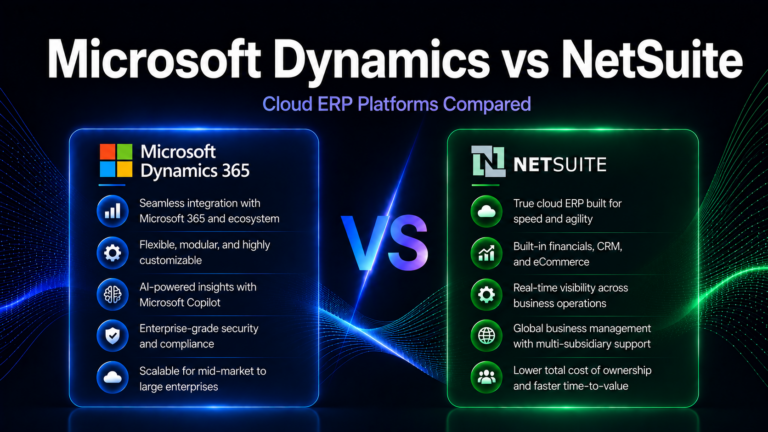
BlackLine maintains the deepest SAP integration in the category, with a native S/4HANA connector that pulls trial balance data in real time without middleware. This architectural advantage is significant for companies on SAP, which represents the plurality of enterprise BlackLine customers. Its Oracle Fusion and Microsoft Dynamics 365 integrations are strong but rely on API connectivity rather than native database access. BlackLine also integrates with over 100 ERPs through its Universal Data Connector framework, though integration depth varies significantly across non-core ERPs.
Trintech has strong native integrations with SAP, Oracle E-Business Suite, Oracle Fusion, and Microsoft Dynamics AX/365. For legacy ERP environments that BlackLine handles primarily through custom API work, Trintech’s implementation partner ecosystem often has pre-built connector templates that reduce integration effort and risk. This is a meaningful differentiator for companies on non-standard ERP platforms.
FloQast integrates with over 60 ERPs including NetSuite, QuickBooks, Sage Intacct, Microsoft Dynamics, Oracle, SAP, and most major mid-market and enterprise ERP systems. Its integration architecture pulls trial balance data on a configurable refresh schedule (hourly to real-time for supported ERPs), and its GL mapping interface is designed for accountants rather than IT administrators. For mid-market companies on modern cloud ERPs, FloQast’s integration is consistently rated the easiest to configure and maintain.
Numeric supports NetSuite, QuickBooks Online, Sage Intacct, and Xero with genuine real-time bi-directional sync — changes in the ERP are reflected in Numeric within minutes rather than overnight. For companies on legacy ERPs, Numeric’s integration coverage is more limited, which is one reason the platform is primarily adopted by companies that have already migrated to modern cloud ERP systems. Adra supports major mid-market ERPs with solid integration quality, though its real-time sync capabilities are less advanced than Numeric’s for the ERPs it supports. Planful and Workiva both offer broad ERP integration libraries with reliable sync quality, with Workiva’s integrations particularly strong for companies that also need their trial balance data to flow into SEC filing documents.
Decision Guide
Best Financial Close Automation Software by Company Size
Early-stage and growth companies (under $50M revenue, 5–20 person finance team): Numeric is the strongest choice for companies at this stage. Its fast implementation, AI-native capabilities, and modern UX allow small finance teams to build professional close infrastructure without the overhead of enterprise platform adoption. FloQast is a strong alternative if the team already has an established reconciliation process and wants a tool that maps closely to their existing workflow. Neither BlackLine nor Trintech is appropriate at this scale — the implementation burden will consume resources the company cannot afford to spend.
Mid-market companies ($50M–$500M revenue, 20–80 person finance team): FloQast is the market leader at this segment for good reason. Its combination of fast implementation, high user adoption, strong reconciliation automation, and AI capabilities serves the majority of mid-market close use cases effectively. Adra is a compelling alternative for companies that want a more structured controls framework or anticipate significant growth into enterprise complexity. Numeric is increasingly competitive in this segment for companies on modern ERPs. Planful is the right choice for companies solving planning and close simultaneously.
Mid-enterprise companies ($500M–$2B revenue, 50–200 person finance function): FloQast and BlackLine both compete effectively in this segment, with the decision typically driven by ERP environment (BlackLine if on SAP), compliance requirements (BlackLine for the most demanding SOX programs), and budget (FloQast typically 30–40% lower TCO). Trintech is a strong alternative to BlackLine for companies that want enterprise depth with a more competitive price point and a phased implementation option. Workiva becomes increasingly relevant in this segment for companies with active SEC reporting requirements.
Enterprise companies ($2B+ revenue, 200+ person finance function): BlackLine and Trintech are the primary choices, with selection driven by ERP environment, existing platform relationships, and implementation partner availability. Workiva is the standard for SEC reporting and SOX compliance infrastructure in this segment. Many large enterprises run BlackLine or Trintech for the close and Workiva for the disclosure management layer — a best-of-breed combination that addresses both functions at full depth. Planful can serve the FP&A and consolidation layer in this stack. For multi-national enterprises on SAP, BlackLine’s native integration advantage is often the deciding factor.
Implementation
Implementation Considerations
Successful financial close automation implementations share a set of characteristics that have nothing to do with the platform you choose. The most common implementation failures in this category are not technology failures — they are process failures. Teams that jump directly from a vendor selection to platform configuration without first documenting their current close process and desired future state consistently produce implementations that automate the wrong things, miss critical edge cases, and require expensive rework in the months following go-live.
Before configuring any platform, document your current close process in detail. Map every close task, every reconciliation account, every journal entry type, every approval chain, and every exception workflow. This documentation serves three purposes: it becomes your configuration specification, it helps you identify which parts of your process should be automated versus redesigned, and it creates a baseline against which to measure your post-implementation improvement.
Establish a named close process owner — typically the Controller or VP Finance — who is accountable for go-live and adoption metrics rather than just technical setup. Without a named owner with executive sponsorship, implementation projects drift and the platform ends up as an expensive checklist tool rather than a genuine close transformation. The most successful implementations we observed had Controllers who viewed the platform as their operational system of record and invested personal effort in driving adoption across their teams.
Run a parallel close for at least one full close cycle before cutting over fully. This means running your existing process and the new platform simultaneously, comparing results, and resolving discrepancies before your team relies on the platform exclusively. The cost of a parallel close is small compared to the cost of discovering configuration errors after full cut-over, particularly for reconciliations where an undetected mapping error can persist for months without obvious symptoms.
Define your success metrics before go-live: close cycle time (from period-end to management reporting package delivery), reconciliation completion rate by day 3, exception rate, and reviewer bottleneck frequency. These metrics create accountability for the platform and give your team a clear view of whether the implementation is delivering its promised value. Share these metrics with your implementation partner and hold them jointly accountable for the outcomes, not just the go-live date.
For AI-enabled platforms, invest in data quality before activation. FloQast’s Copilot, Numeric’s AI features, and BlackLine’s AI Risk Score all learn from historical data. Teams that launch AI features on top of poorly organized historical reconciliation data or inconsistently coded GL accounts will find the AI underwhelming in the first 90 days — not because the technology is weak, but because it is learning from noisy data. A focused data cleanup sprint before implementation significantly accelerates the value realization timeline for AI capabilities.
Governance
Governance Considerations
Financial close automation software is not just an operational efficiency tool — it is a controls infrastructure investment. The governance implications of your platform choice deserve explicit analysis in your evaluation process, separate from the workflow and productivity considerations that typically dominate close automation discussions.
Audit trail requirements. Every platform in this guide maintains an audit trail, but the depth, immutability, and queryability of those audit trails varies significantly. For SOX-compliant environments, the audit trail must be immutable (no deletions or modifications after the fact), user-attributed (every action linked to a specific named user with timestamps), and document-linked (supporting workpapers attached and version-controlled at the task level). BlackLine and Trintech’s audit trails satisfy even the most demanding PCAOB requirements. FloQast and Numeric satisfy standard external audit requirements and most SOX programs. Verify specific audit trail requirements with your external auditor before making a final platform selection.
Segregation of duties. Close automation platforms enforce preparer/reviewer segregation by preventing the person who prepares a reconciliation from also certifying it. This sounds simple but is surprisingly difficult to maintain consistently in spreadsheet-driven closes, where the same person often prepares and self-approves documentation under deadline pressure. The better platforms extend segregation of duty controls to journal entries, where unauthorized adjustments represent one of the highest fraud risks in the financial close. Ensure your platform enforces mandatory reviewer assignment for all material journal entries and that the reviewer list cannot be modified by the preparer.
Access controls and user provisioning. As finance teams grow and change, managing who has access to which accounts and workflows in your close platform becomes a control risk of its own. Platforms with native integration into your identity provider (Okta, Azure AD, Google Workspace) allow automated provisioning and de-provisioning as team members join and leave — eliminating the risk of departed employees retaining access to financial systems. Evaluate SSO integration and automated user lifecycle management as a governance requirement rather than a convenience feature.
Change management documentation. When your close process changes — new accounts added, approval thresholds modified, new entities onboarded — those changes should be documented in a configuration change log with the same rigor as the close tasks themselves. Some platforms provide built-in configuration audit logs; others require manual documentation of process changes. For SOX environments, undocumented configuration changes are a material control weakness. Establish a formal change management process for your close platform from day one, not after your first audit finding.
AI governance in the close. As AI features are adopted for anomaly detection, auto-certification, and flux analysis, finance leaders need to define governance frameworks for AI-assisted decisions. Which accounts can be auto-certified by the AI without human review? What confidence threshold triggers mandatory human intervention? Who reviews and approves changes to AI model parameters? These governance questions apply to every platform with AI-assisted close features and should be answered before activating those features, not after. The AICPA has published guidance on AI in financial reporting that provides a useful framework for internal AI governance policy development. For a broader view of AI adoption in finance, see our guide to the Best AI Tools for Finance Teams.
Common Pitfalls
Common Buying Mistakes
Mistake 1: Evaluating on reconciliation count rather than reconciliation complexity. Vendors will ask how many account reconciliations you perform per month. The number is less important than the types: high-volume, low-complexity bank reconciliations are a different problem from low-volume, high-complexity intercompany or investment account reconciliations. Make sure your evaluation covers your hardest reconciliations, not just your easiest ones. A platform that handles your simple reconciliations beautifully but cannot manage your complex intercompany balances will disappoint you within the first quarter.
Mistake 2: Underestimating the importance of user experience for adoption. Close management platforms are used by accountants under deadline pressure in the last days of every month. If the interface is confusing, slow, or requires multiple steps for simple actions, adoption will suffer regardless of the platform’s technical capabilities. Require hands-on user testing by the accountants who will use the platform daily — not just the Controller and CFO — before making a final decision. FloQast and Numeric consistently outperform BlackLine and Trintech on user experience scores in practitioner reviews, and this gap translates directly into adoption rates.
Mistake 3: Buying for your current ERP without considering your ERP roadmap. Financial close platforms are sticky — migrations are expensive and disruptive. If your company is planning an ERP migration in the next 24–36 months (SAP to S/4HANA, Oracle to Fusion, or QuickBooks to NetSuite), the ERP migration will force a close platform re-evaluation unless your chosen platform supports both ERPs with equal quality. Understand your ERP roadmap before committing to a close automation platform that may not survive the transition.
Mistake 4: Optimizing for demo performance rather than production reliability. Close automation platform failures always happen on day 3 or day 4 of the close — the worst possible time. Before signing, ask for production uptime SLA commitments, scheduled maintenance windows, and the vendor’s track record for ERP sync failures. Ask for references from customers who have experienced an ERP sync failure and ask how the vendor responded. A vendor’s incident response capability is as important as their product capability when the close is on the line.
Mistake 5: Letting IT drive the selection rather than Finance. Financial close automation platforms are finance operations tools, not IT infrastructure. The selection criteria — workflow design, reconciliation methodology, reviewer experience, audit trail format — are finance decisions. IT’s role is to evaluate security architecture, SSO requirements, and ERP connectivity. When IT drives close platform selection, the result is often a technically capable platform that accountants hate using. Finance leadership should own the selection process with IT as a technical advisor.
Mistake 6: Negotiating only on license price rather than total cost of ownership. Implementation services, training, annual price escalation caps, and data portability rights upon contract termination are often more valuable to negotiate than the base license fee. A 10% discount on license fees is worth less than a commitment for 40 hours of included implementation support, a 5% annual escalation cap, or a guaranteed data export right if you decide to switch platforms in year three. Model your full 3-year TCO before entering contract negotiations.
FAQ
Frequently Asked Questions
What is financial close automation software?
Financial close automation software digitizes and automates the month-end, quarter-end, and year-end close process — replacing manual spreadsheet-based task management and reconciliation tracking with structured workflows, automated matching, AI-assisted anomaly detection, and audit-ready documentation. The best platforms reduce close cycle time, improve accuracy, and give finance leaders real-time visibility into close status.
How long does a financial close automation implementation take?
Implementation timelines vary significantly by platform and complexity. Numeric implementations typically complete in 2–4 weeks. FloQast and Adra average 4–8 weeks for mid-market deployments. BlackLine and Trintech enterprise implementations typically run 3–12 months depending on entity count, ERP complexity, and module scope. Workiva implementations for the disclosure layer add additional time if implemented in conjunction with a close platform.
How much does financial close software cost?
Pricing is almost universally quote-based and scales with user count, entity count, and module scope. Directionally: Numeric and Adra start around $800–$2,000/month for mid-market. FloQast typically runs $1,200–$3,000/month. BlackLine and Trintech enterprise deployments start at $3,000+/month and scale significantly with complexity. First-year implementation costs can add 50–200% to the license cost for enterprise platforms.
What is the difference between close management and reconciliation automation?
Close management covers the full workflow of the financial close — task assignments, deadlines, dependencies, reviewer sign-offs, and close status dashboards. Reconciliation automation focuses specifically on the account reconciliation process — matching transactions against source systems, certifying account balances, and managing exceptions. All platforms in this guide provide both capabilities, but their relative depth varies: FloQast and Numeric are stronger on workflow and UX; BlackLine and Trintech are stronger on reconciliation depth and controls.
Which financial close software is best for a SOX-compliant company?
BlackLine and Trintech are the most complete options for demanding SOX compliance programs. Both support PCAOB-compliant preparer/reviewer/approver workflows, immutable audit trails, and multi-level certification documentation that satisfies Big 4 auditor requirements. FloQast satisfies most mid-market SOX programs effectively. Workiva is essential if you also need SOX Section 404 control testing workflows and disclosure documentation connected to the same data as your close.
Can financial close software replace my ERP?
No. Financial close automation platforms complement ERPs — they improve the workflow and control layer of the close process while maintaining your ERP as the system of record for financial data. The best platforms sync bi-directionally with your ERP so that close activity is immediately reflected in GL balances without manual re-entry. They do not replace your ERP’s core accounting functions.
How does AI improve the financial close?
AI improves the close in three primary areas: automated reconciliation matching (reducing manual transaction matching effort), anomaly detection and flux analysis (surfacing account movements that warrant investigation), and auto-certification (closing low-risk accounts without manual review when balances are within defined thresholds). Platforms like Numeric and FloQast are most advanced in applying AI to practical close use cases. For a deeper exploration of AI in finance, see our guide to Best AI Tools for Finance Teams.
What should I ask vendors during a financial close software demo?
The most revealing demo questions are: How does your platform handle a reconciliation where the sub-ledger balance does not agree to the GL? Show me what happens when an ERP sync fails mid-close. How does the audit trail look for a journal entry that was modified after initial preparation? What is your actual uptime SLA during month-end? These questions reveal operational reality that polished demos are designed to obscure.
Final Verdict
Industry research & citations: G2 Financial Close Software category — peer reviews from 3,000+ verified users. Gartner Peer Insights for Financial Close Solutions. McKinsey State of AI 2024: financial close is among the top use cases for AI automation in finance, with 3–7 day cycle time improvements typical. Deloitte Finance AI Survey 2024: AI-assisted close reduces manual reconciliation effort by 35–60%. APQC Financial Close Benchmarks: top-quartile organizations close in 4.8 days vs. 10.1 days for median performers.
Final Recommendations
If you are a CFO or Controller approaching a financial close automation software decision in 2026, the most important thing to understand is that this is a long-term infrastructure investment. Close management platforms are highly sticky — once your team’s reconciliation workflows, approval chains, and audit documentation are built into the platform, migration is expensive and disruptive. Buy for where you expect to be in three years, not where you are today.
The clearest fit patterns, based on our evaluation, are as follows.
Choose FloQast if you are a mid-market company (100–2,000 employees) that wants the fastest path from manual close to automated close, values user adoption over configuration depth, and needs a reconciliation platform that your accountants will actually use without sustained enablement investment. FloQast is the most-deployed platform in its segment for good reason.
Choose BlackLine if you are a large enterprise or public company with complex multi-entity structures, demanding SOX compliance requirements, significant SAP ERP investment, and the organizational bandwidth to support a comprehensive implementation. BlackLine’s depth justifies its cost and complexity for organizations where close automation is a strategic compliance priority, not just an operational efficiency play.
Choose Numeric if you are a high-growth company (Series B–D) that wants AI-native close capabilities from day one, needs to implement in weeks rather than months, and values a modern UX that finance teams embrace without being forced. Numeric is the fastest-growing platform in this guide and its AI roadmap is the most aggressive.
Choose Trintech if you need enterprise-grade reconciliation and compliance depth comparable to BlackLine but want a more competitive total cost of ownership and a more structured implementation methodology with phased go-live options. Trintech is consistently undervalued in evaluations and frequently surprises buyers who experience it alongside BlackLine in a competitive selection.
Choose Adra if you are a mid-market company ($50M–$500M revenue) that wants enterprise-quality controls at an accessible price point and anticipates growth that may eventually require Trintech’s enterprise Cadency platform. The upgrade path between Adra and Cadency is a genuine long-term advantage.
Choose Planful if you are solving your FP&A and close challenges simultaneously and want a single platform that covers budgeting, forecasting, close management, and consolidation without stitching together multiple point solutions. The integrated value proposition is compelling when both problems need solving at the same time.
Choose Workiva if you are a public company, a company preparing for IPO, or an organization with material SEC reporting, SOX 404 compliance, or ESG disclosure obligations. Workiva is not competing in the same use case as the other platforms in this guide — it is the standard for connected financial reporting, and its close management capabilities are best understood as an extension of that reporting infrastructure.
Whatever platform you select, the most important success factor is not the technology — it is the organizational investment in implementation, adoption, and continuous optimization. The best close automation software in 2026 is the platform that your finance team trusts, uses consistently, and builds its controls infrastructure around. Start there and work backward to the evaluation criteria.
Explore our guides to the Best AI Tools for Finance Teams, ChatGPT for Finance Teams, AI for Accounts Payable Automation, and the Best AP Automation Software for a complete picture of the AI-driven finance operations stack in 2026. For implementation guidance, see our Finance Operations Transformation Guide.
How we rate & rank software
This guide is produced through independent research. Rankings reflect our editorial assessment across eight criteria including product capabilities, implementation reality, integration depth, pricing transparency, and vendor stability. No vendor pays for placement or influences our conclusions. Read our full Research Methodology →
See also our BlackLine vs FloQast comparison, BlackLine vs Trintech, and FloQast vs Trintech. For individual vendor reviews, explore FloQast, Trintech, Numeric, Redwood, CCH Tagetik, and Lucanet. View the full Finance Software Comparison Pages., and the FloQast Ops review, Leapfin review, and Cadency review