AI for AP Automation: The Finance Operations Transformation Guide (2026)
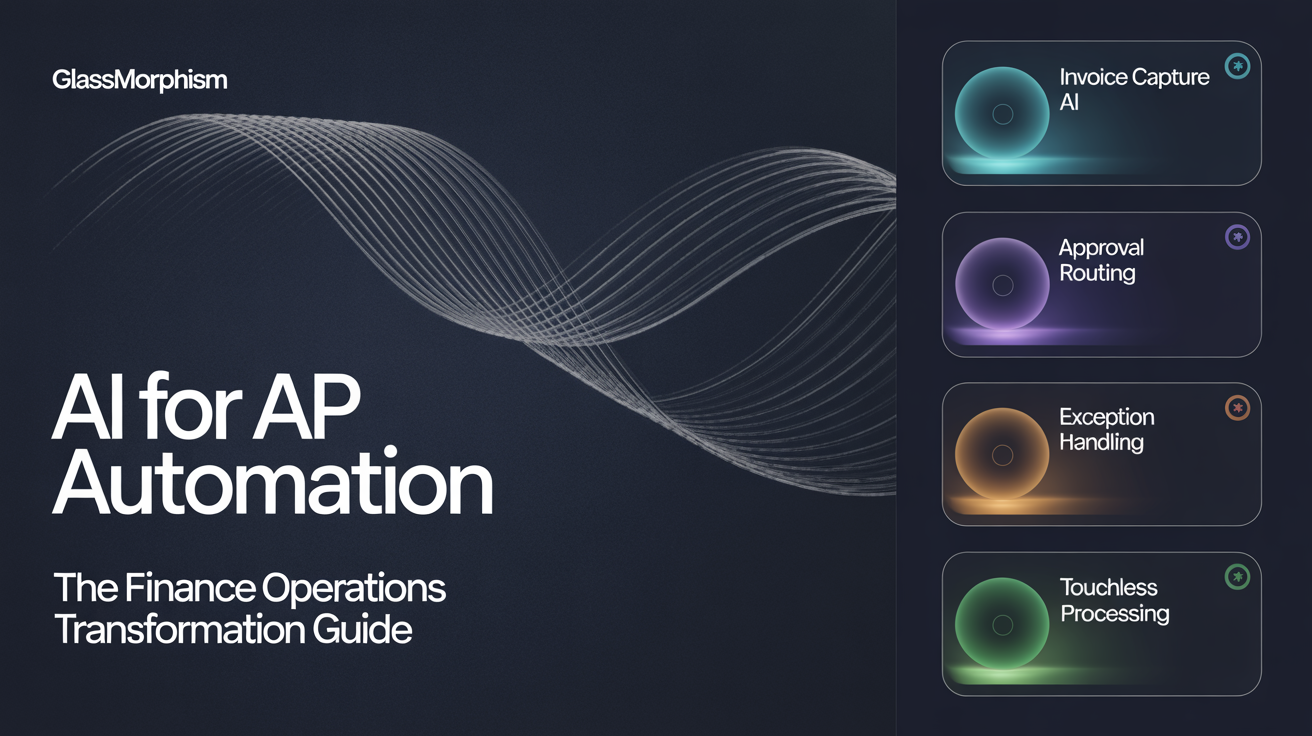
AI for AP Automation:
The Finance Operations Transformation Guide
How modern finance teams are using AI to eliminate manual invoice processing, reduce payment errors, and transform accounts payable from a cost centre into a strategic operations function.
2 The Hidden Cost of Manual AP
3 AI Use Cases in AP
4 AI vs Traditional AP Automation
5 Best AI Tools for AP Automation
6 AP Workflow Architecture
7 AP Automation Maturity Model
8 Recommended AP Automation Stack
9 ROI & Implementation
10 Governance & Operational Realism
11 Risks & Limitations
12 FAQ
→ Back to Top
Why AP Automation Matters Now — and Why AI Changes Everything
Accounts payable is the highest-friction, most labour-intensive workflow in most finance functions. For decades, the solution has been more headcount, more chasing, and more manual reconciliation. AI changes that equation fundamentally — not by adding another software layer, but by automating the cognitive work that made AP so costly to begin with.
The traditional AP workflow involves receiving invoices in multiple formats (PDF, email, portal, paper), manually keying data into accounting systems, coding invoices to the correct GL accounts, routing for approval, chasing approvers, matching against purchase orders, handling exceptions, scheduling payments, and reconciling vendor statements. At a mid-market company processing 500–2,000 invoices per month, this workload consumes entire FTEs and creates significant error rates, late payment penalties, and strained vendor relationships.
AI-native AP automation addresses each of these steps with purpose-built intelligence. Optical character recognition (OCR) and large language models extract invoice data at near-human accuracy. Machine learning models predict GL coding based on prior transactions. AI-powered exception handling flags anomalies before they become errors. Automated vendor communication reduces the “where is my payment?” inbox. The result: dramatically lower cost per invoice, faster close cycles, fewer payment errors, and finance team capacity redirected to higher-value work.
This guide is written for finance leaders making real AP automation decisions — not for readers looking for a software comparison list. We examine the transformation architecture, the implementation realities, the governance requirements, and the operational considerations that determine whether AP automation projects succeed or stall.
The AP automation market has evolved substantially in the past three years. First-generation automation (basic OCR + workflow rules) is now table stakes. The competitive differentiation is now in AI-native platforms that learn from transaction history, handle exceptions intelligently, and integrate bidirectionally with ERP systems. Finance leaders evaluating AP tools in 2026 should be evaluating intelligence, not just automation.
What Finance Leaders Need to Know About AP Automation in 2026
Cost Analysis
The Hidden Cost of Manual AP Workflows
Most finance teams calculate the cost of AP in labour hours. They are systematically underestimating the true cost. Manual AP workflows carry six distinct cost layers — and most finance leaders are only tracking one of them.
Why Finance Teams Underinvest in AP Automation
The single most common reason finance leaders delay AP automation investment is a limited cost picture. When you only count labour cost, the business case feels marginal. When you include late payment penalties, forgone early-payment discounts, duplicate payment recovery costs, and close cycle delays, the business case becomes overwhelming. We consistently observe that finance teams which conduct a full hidden-cost audit approve AP automation projects. Those that do not, defer indefinitely.
AI Capability Breakdown
Where AI Creates Value Across the AP Workflow
AP automation is not a single technology — it is a stack of AI capabilities applied to specific workflow steps. Understanding where AI adds the most value (and where it still requires human oversight) is essential for realistic implementation planning.
Invoice Capture & Data Extraction
AI extracts structured data from invoices regardless of format — PDF, scanned paper, email body, EDI, or vendor portal. Modern AI achieves 95–99% extraction accuracy, with exceptions flagged for human review rather than manual rekeying.
- Vendor name, invoice number, date, amount, line items
- Tax codes, currency, payment terms, bank details
- Multi-currency, multi-language invoice support
- Confidence scoring flags low-certainty extractions
🔥 Highest Impact
GL Coding & Cost Allocation
AI recommends GL codes, cost centres, and project allocations based on historical transaction patterns. Models improve over time as they learn your chart of accounts and vendor-specific coding preferences. Reduces coding time by 70–90%.
- Automated GL code recommendation from transaction history
- Cost centre and project code allocation
- Coding rule management without manual maintenance
- Exception routing for new vendors or unusual invoices
🔥 Highest Impact
Approval Routing & Workflow
AI routes invoices for approval based on amount, vendor, cost centre, and policy rules. Intelligent escalation identifies approaching payment deadlines and escalates automatically. Reduces approval cycle times from days to hours.
- Dynamic approval routing by amount, vendor, department
- Delegation rules for absent approvers
- Automated reminders and SLA monitoring
- Bottleneck identification and escalation alerts
🔥 Highest Impact
3-Way Matching & PO Reconciliation
AI matches invoices against purchase orders and goods receipts automatically, flagging price discrepancies, quantity mismatches, and duplicate invoices. Reduces the most time-consuming manual reconciliation work in AP.
- Invoice vs PO vs GR automated matching
- Price variance detection and tolerance rules
- Duplicate invoice detection across historical records
- Partial delivery and partial invoice handling
🔥 Highest Impact
Exception Handling & Dispute Management
AI identifies, categorises, and routes exceptions — mismatched invoices, missing POs, coding disputes, vendor queries — based on type and priority. Reduces exception resolution time and prevents exceptions from blocking payment runs.
- Automatic exception classification and severity scoring
- Resolution routing to appropriate owners
- SLA tracking for exception resolution
- Pattern detection for systemic exception causes
📈 High Impact
Vendor Communication & Self-Service
AI-powered vendor portals and automated communication reduce inbound vendor payment enquiries by 60–80%. Vendors get real-time payment status visibility; AP teams eliminate the “where is my payment?” inbox that consumes significant AP staff time.
- Real-time payment status portal for vendors
- Automated payment confirmation and remittance advice
- AI-assisted dispute resolution correspondence
- Vendor onboarding workflow automation
📈 High Impact
The four highest-ROI AI use cases in AP: invoice capture (eliminates manual data entry), GL coding (eliminates manual coding), 3-way matching (eliminates manual reconciliation), and approval routing (eliminates approval bottlenecks). These four capabilities alone justify most AP automation investments. Vendor communication and exception handling compound the ROI over time.
Market Intelligence
AI vs Traditional AP Automation: What’s Actually Different
The AP automation market has two distinct technology generations. Finance leaders evaluating platforms in 2026 need to understand the fundamental architectural differences — not just the feature lists.
| Capability | Legacy/Rule-Based AP (Gen 1) | AI-Native AP (Gen 2) | Winner |
|---|---|---|---|
| Invoice Capture Method | Template-based OCR — requires vendor templates to be created and maintained | AI extraction learns from any invoice format without templates | AI-Native ✓ |
| GL Coding | Rule-based: rules must be manually created and maintained for every vendor/scenario | ML-based: learns from historical transactions, improves automatically over time | AI-Native ✓ |
| Exception Handling | Static rules flag exceptions; all exceptions require manual resolution | AI classifies exceptions by type and probability; resolves common exceptions automatically | AI-Native ✓ |
| New Vendor Handling | Manual template creation required; processing blocked until template built | AI processes new vendors immediately; no template setup required | AI-Native ✓ |
| ERP Integration | Often via file-based imports; can have bi-directional sync issues | Native API integration with major ERPs; real-time bidirectional sync | Varies by Vendor |
| Accuracy Over Time | Static — accuracy does not improve without manual rule updates | Improves over time as the model learns from your transaction history | AI-Native ✓ |
| Implementation Time | 3–9 months (template setup, rule configuration, ERP integration) | 6–12 weeks for core workflows; AI models improve post go-live | AI-Native ✓ |
| Total Cost of Ownership | High: enterprise licensing plus significant IT and change management investment | Mid-market SaaS pricing, lower IT overhead, faster ROI timeline | AI-Native ✓ |
| Vendor Maturity | Established vendors (20+ years), deep enterprise integration experience | Newer vendors (5–10 years), faster product development cycles | Context-Dependent |
| Best For | Large enterprises (>10,000 invoices/month) with complex ERP environments | Mid-market companies (200–10,000 invoices/month) seeking modern UX and ROI speed | Depends on Size |
When Legacy AP Automation Still Makes Sense
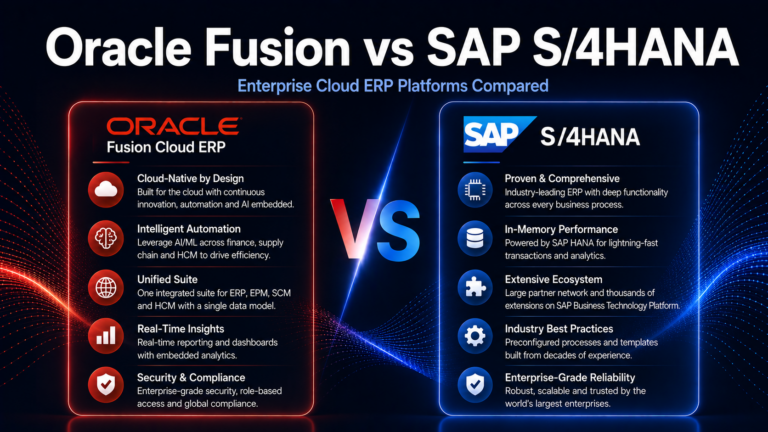
For enterprise organisations with highly complex AP environments — multiple ERPs, high regulatory complexity, or 50,000+ invoices/month — established platforms like Basware, Tungsten Network (formerly Kofax), and SAP Ariba still offer deeper integration capabilities. The critical distinction is not “legacy vs AI” but “does this platform’s integration approach match my ERP environment and operational complexity?” Mid-market teams (200–5,000 invoices/month) should default to AI-native platforms unless their ERP integration requirements specifically demand otherwise.
2026 Market Overview
Best AI Tools for AP Automation: An Independent Assessment
The AP automation market has consolidated significantly. For a deeper dive, see our dedicated AI for Accounts Payable Automation: Best Tools Compared guide. Below is our independent assessment of the platforms most relevant to finance teams making decisions in 2026 — evaluated on AI capability, ERP integration depth, mid-market fit, and implementation track record. No paid placements.
BILL (formerly Bill.com)
The dominant mid-market AP automation platform. BILL uses AI for invoice data capture, GL coding, and payment scheduling. Particularly strong for US-based companies with QuickBooks, Xero, or Sage Intacct. Comprehensive payments functionality including ACH, virtual cards, and international wires.
Payment Automation
Vendor Portal
Tipalti
Global AP automation leader for mid-market and scale-up companies with international payment complexity. Tipalti’s AI handles invoice capture, GL coding, and payment processing across 196 countries and 120 currencies. Particularly strong for technology and marketplace companies with high volume payee payments.
Tax Compliance
Mass Payouts
Airbase (now Guideline Financial)
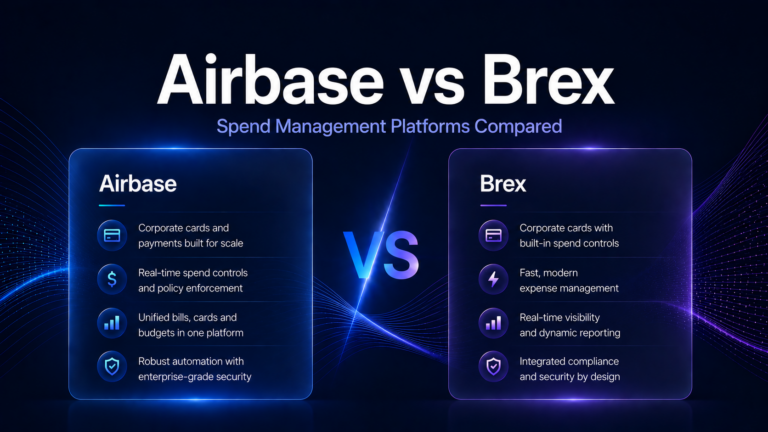
Airbase combines AP automation, corporate cards, and expense management into a unified spend management platform. AI automates invoice capture, GL coding, and approval routing. The all-in-one approach appeals to mid-market teams wanting to consolidate multiple spend tools.
Expense Management
Unified Spend
Ramp
Ramp’s finance automation platform includes AP automation with AI-powered invoice capture, GL coding, and payment scheduling. Ramp differentiates on AI insights across spending — identifying vendor savings, duplicate subscriptions, and negotiation opportunities alongside AP processing.
Corporate Cards
AI Insights
Coupa
Enterprise Business Spend Management (BSM) platform covering procurement, invoicing, and payments. Coupa’s AI capabilities are embedded across the platform — invoice capture, GL coding, anomaly detection, and spend analytics. Best suited to enterprise organisations with complex procurement processes.
Procurement
Contract Management
Stampli
Stampli positions itself as the most ERP-flexible AP automation platform. Its AI (Billy the Bot) handles invoice capture, coding suggestions, and communication tracking. Key differentiator: Stampli is ERP-agnostic with certified integrations for 70+ systems — the broadest ERP coverage in the market.
AI Communication
Collaboration
Process Design
AI-Native AP Workflow Architecture
Modern AP automation transforms a linear, manual process into an intelligent workflow where AI handles routine processing and humans focus exclusively on judgement, exceptions, and approvals. Understanding the architecture is essential for implementation planning.
The Modern AI-Native AP Workflow
From invoice receipt to payment — how AI handles each stage
AI Automated
AI Automated
AI Automated
AI Automated
AI-Assisted
Human Authorised
Why Approval Workflow Design Determines Implementation Success
Finance teams invest significant time selecting AP automation software and very little time designing the approval workflow. This is backwards. The approval workflow — delegation thresholds, escalation rules, absence coverage, multi-entity routing — is the most complex and most frequently changed component of any AP implementation. Teams that design the approval matrix thoroughly before go-live consistently report faster implementation and fewer post-launch disruptions. Those that configure approval workflows reactively spend months troubleshooting edge cases that should have been designed upfront.
Framework
AP Automation Maturity Model
Where is your AP function on the automation maturity spectrum? This model helps finance leaders assess current state and prioritise the right investments.
AP Automation Maturity Model
Assess your current AP automation maturity and identify the next investment priority
- AP inbox with 100+ unprocessed items
- Month-end delayed by AP bottlenecks
- Multiple FTEs dedicated to invoice entry
- OCR in use but rules-based, requires maintenance
- Approval tracking via email threads
- No systematic exception management
- STP (straight-through processing) rate >60%
- Approval workflow documented and enforced
- Invoice-to-payment cycle time tracked
- STP rate >80% across all invoice types
- Duplicate payment rate <0.05%
- Early payment discount capture >70%
- Dynamic discounting programme generating returns
- AP data used in procurement negotiation
- Finance team has no full-time AP processor role
Stack Configurations
Recommended AP Automation Stack by Company Profile
The right AP automation architecture depends on your ERP environment, invoice volume, international payment complexity, and budget. Here are our recommended stack configurations for four common finance team profiles.
$150–400/mo
Global Operations Stack
Microsoft-Native Enterprise
$180–360/user/mo (M365 + D365)
AP Automation ROI: What to Expect and When
Based on observed implementation outcomes across mid-market finance teams. Individual results vary by invoice volume, ERP complexity, and implementation quality.
What Finance Leaders Don’t Talk About Enough
AP automation projects have a high failure rate — not because the technology doesn’t work, but because of predictable operational and change management failures. Here are the issues that experienced AP transformation leaders consistently identify.
Critical Considerations
Risks and Limitations Finance Teams Must Understand
AP automation reduces operational risk when implemented well. But the implementation itself, and the ongoing operation of automated AP workflows, introduces new risk categories that require active management.
The highest risk in AP automation is not the AI failing — it is the controls failing. Most AP fraud, compliance failures, and material misstatements in automated environments occur not because the technology broke, but because the human oversight framework was inadequate. Design your control framework with the same rigour you apply to your financial close controls.
Frequently Asked Questions
AP Automation: Questions Finance Leaders Ask
The Intelligence Briefing for Finance Leaders
Join 2,400+ CFOs and finance operations leaders receiving our weekly briefing on AI tools, automation workflows, and finance technology strategy.
✓ Tool assessments & stack recommendations
✓ Implementation guides & workflow frameworks
Independent editorial. No vendor sponsorship. Unsubscribe anytime.
How we rate & rank software
This guide is produced through independent research. Rankings reflect our editorial assessment across eight criteria including product capabilities, implementation reality, integration depth, pricing transparency, and vendor stability. No vendor pays for placement or influences our conclusions. Read our full Research Methodology →