Early Payment Discounts for Finance Teams | FinanceCopilotHQ
Early payment discounts represent one of the highest-return, lowest-risk opportunities in corporate finance — and one of the most consistently missed by AP teams without automated payment workflows. A 2/10 net 30 discount, the most common early payment discount term, offers a 2% discount for payment within 10 days of invoice date versus payment at 30 days. Annualized, that represents a 36.7% return on deployed working capital — far exceeding most organizations’ cost of capital. The reason most finance teams miss the majority of available early payment discounts is not financial analysis failure; it is AP process speed failure. For a full platform comparison, see our Best AP Automation Software guide.
What it is: The use of AP automation and payment workflow software to systematically identify, prioritize, and capture vendor early payment discounts — by accelerating invoice processing to within the discount window and providing visibility into available discount opportunities before they expire.
Top tool for this use case: Tipalti for organizations that want discount capture integrated with global payment execution; Ramp for fast-growth companies that want spend visibility and early payment optimization in a single platform.
Ideal company profile: Organizations with significant vendor relationships offering early payment terms, companies with available cash or access to credit facilities at rates below their discount rate, and any AP team where invoice cycle time is currently too long to consistently capture discount windows.
What Is Early Payment Discount Automation?
Early payment discount automation refers to the AP systems and processes that enable an organization to consistently identify invoices with available early payment terms, prioritize them in the payment workflow, and execute payment within the discount window — systematically rather than opportunistically. Without automated invoice processing and payment workflows, early payment terms expire before AP staff have even finished coding and approving the invoice — making discount capture structurally impossible regardless of cash availability or intent.
Modern AP automation platforms address this through invoice capture automation that processes invoices immediately upon receipt, approval workflow routing that can identify and fast-track invoices with discount terms, payment scheduling that automatically prioritizes discount-eligible invoices, and reporting that shows the value of captured versus missed discounts over time — creating the visibility and accountability for discount capture that manual AP processes cannot provide.
Early payment discount programs connect directly to payment automation (which enables rapid payment execution) and invoice approval workflows (where cycle time reduction is the primary enabler). Dynamic discounting programs — where buyers offer vendors early payment at a negotiated discount rate through a fintech platform — are an adjacent use case that extends this capability to vendors who do not offer standard early payment terms.
The Business Case
The financial return on early payment discount capture is among the highest in corporate finance. IOFM research has documented that organizations with high discount capture rates — above 15% of eligible invoices — generate annualized returns on working capital deployed for early payment that consistently exceed 20–35% depending on the discount terms available. At $1 million of monthly payables with 30% early payment discount eligibility at 2/10 net 30 terms, systematic capture represents approximately $72,000 in annual savings — money that was previously left on the table due to processing delays.
Ardent Partners’ working capital research documents a persistent gap between the discount capture rates that finance leaders believe they are achieving and what actual AP data reveals. Organizations that have implemented automated payment workflows and measured their discount capture rates systematically consistently discover that their pre-automation capture rate was lower than management estimated — often below 5% of eligible invoices — while post-automation capture rates reach 20–40% with no additional cash investment beyond accelerating payments already due.
Vendor relationship value is a secondary benefit. Vendors who receive early payment consistently tend to prioritize those customers in supply chain disruptions, offer improved pricing at renewal, and provide more favorable payment terms over time. APQC’s supplier relationship benchmarking shows that early payment customers systematically achieve better vendor contract terms than late-paying customers — a relationship benefit that compounds the direct discount value.
Common Challenges
Invoice processing cycle time exceeding discount windows. Most early payment discount terms offer windows of 5–10 days from invoice date. An AP process that takes 7–10 days to capture, code, approve, and schedule a payment will miss most 10-day windows and all 5-day windows regardless of intent.
Discount term capture and visibility. If discount terms are not captured from the invoice at the point of entry — and stored in a searchable field — AP teams have no systematic way to identify which invoices in their queue have outstanding discount windows. Without visibility, discount prioritization is impossible.
Payment authorization bottlenecks. Even when invoices are approved for payment, authorization bottlenecks at the payment execution stage — a CFO who approves wire transfers only twice a week, or a bank portal that requires dual authentication from two signatories — can push payment past discount windows after the AP workflow itself has been completed promptly.
Cash forecasting misalignment. Early payment requires deploying cash earlier than standard payment terms require. Without integration between AP payment scheduling and the treasury cash forecast, early payment decisions are made without visibility into whether the cash deployment conflicts with other near-term cash commitments.
How Software Solves It
AP automation addresses the cycle time problem by compressing the invoice processing workflow — automated capture, AI coding, and fast-path approval routing for straight-through invoices can reduce invoice cycle time from 7–10 days to 1–2 days for clean invoices. Combined with automated payment scheduling that identifies and prioritizes discount-eligible invoices, this creates the processing speed required to systematically capture discount windows.
Discount visibility is provided through payment terms fields captured at the invoice level and surfaced in the AP platform’s reporting and payment scheduling interface. Tipalti and Ramp both surface discount capture reporting that shows the value of captured versus missed discounts, creating the visibility and accountability that makes discount capture a measurable AP KPI rather than an occasional opportunity.
Best Tools For Early Payment Discount Capture
Tipalti provides payment terms management integrated with its end-to-end AP-to-payment platform, with payment scheduling that can prioritize discount-eligible invoices and reporting on discount capture performance. Its fast payment execution capability — ACH and wire payments processed on the same day for most geographies — makes the discount window consistently achievable for organizations with clean invoice approval workflows. See our AP Automation Buyer Guide.
Limitation for this use case: Tipalti’s discount capture reporting and analytics are solid but not its primary differentiation. Organizations where dynamic discounting (offering early payment to vendors who do not currently offer discount terms) is a strategic priority may need supplemental fintech tools alongside Tipalti.
Ramp provides spend visibility and payment scheduling that surfaces early payment opportunities across its bill pay and card platform, with real-time cash visibility that helps treasury-conscious teams make early payment decisions in the context of their broader cash position. See the Ramp Review 2026.
Limitation for this use case: Ramp’s early payment discount capabilities are most developed for domestic US payments. For organizations with significant international AP where discount terms are often embedded in foreign currency invoices, Ramp’s international payment depth is insufficient to support systematic global discount capture.
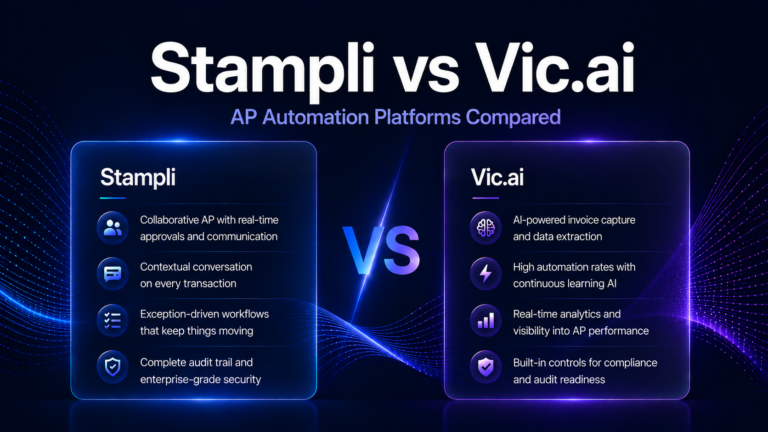
Stampli accelerates the invoice approval cycle — the primary bottleneck in discount capture — through its fast-path approval routing and mobile approval interface. Organizations using Stampli for AP workflow will see improved discount capture rates as a consequence of faster approval cycle times.
Limitation for this use case: Stampli does not provide dedicated discount capture analytics or payment scheduling that prioritizes discount-eligible invoices. The improvement in discount capture is a workflow benefit rather than a dedicated discount management capability.
BILL supports payment terms recording and basic payment scheduling that enables discount window management for small business AP volumes. See the BILL Review 2026.
Limitation for this use case: BILL’s payment scheduling and discount reporting are basic — adequate for small businesses managing a limited number of discount-eligible vendor relationships, but insufficient as a systematic discount capture tool for organizations with significant payables volumes.
Comparison Table
| Platform | Payment Terms Capture | Discount-Priority Scheduling | Discount Analytics | Same-Day Payment Capability | Cash Position Integration |
|---|---|---|---|---|---|
| Tipalti | Strong | Strong | Strong | Yes | Via ERP |
| Ramp | Strong | Strong | Strong | Yes | Native |
| Stampli | Moderate | Moderate | Basic | Via partner | Via ERP |
| BILL | Moderate | Basic | Basic | ACH next-day | Basic |
Implementation Considerations
Before optimizing for discount capture, measure your current invoice cycle time by payment terms category. If your average cycle time for invoices with 10-day discount windows already exceeds 10 days, discount capture improvement is a capture automation and approval workflow problem first — the payment scheduling optimization only matters once the upstream cycle time is fast enough for discount windows to be reachable.
Establish discount capture as a measured AP KPI with monthly reporting — the dollar value of discounts captured versus discounts missed. This visibility drives the operational attention and continuous improvement that systematic discount capture requires, and provides the finance leadership with a concrete ROI number for the AP automation investment.
Which Companies Need This?
Organizations with available cash, access to low-cost revolving credit, or excess working capital that want to optimize returns on that cash should prioritize early payment discount capture. The higher the discount rates offered by vendors and the lower the cost of capital, the larger the discount capture opportunity.
Organizations with long invoice cycle times relative to their vendors’ discount windows should treat discount capture improvement as a downstream benefit of the AP automation investments they need to make for efficiency and compliance reasons — and measure it as a separate ROI stream alongside cost-per-invoice and headcount savings.
Frequently Asked Questions
What is the annualized return on a 2/10 net 30 early payment discount?
A 2/10 net 30 discount (2% for payment 20 days early) annualizes to approximately 36.7% — calculated as (discount% / (1 – discount%)) × (365 / days accelerated). This exceeds the cost of capital for virtually all organizations, making early payment financially attractive wherever available cash permits.
How do you identify which invoices have early payment discount terms?
Automated invoice capture platforms with payment terms extraction can identify and record discount terms at the point of invoice entry — including discount percentage, discount deadline, and net due date. This data feeds into payment scheduling systems that surface discount-eligible invoices for prioritization. Without automated capture, discount terms must be manually recorded — a step that is frequently skipped under time pressure.
Final Recommendation
Early payment discount capture is a financial return, not a feature evaluation — the question is not which platform captures discounts best in isolation, but which combination of invoice cycle time, approval workflow speed, and payment execution capability makes discount windows consistently achievable at your AP volume. Tipalti provides the most complete end-to-end platform for this; Ramp provides the best integration of payment scheduling with real-time cash visibility. See our Best AP Automation Software guide for full platform comparisons.