Segregation of Duties Controls in AP | FinanceCopilotHQ
Segregation of duties controls in AP are the structural safeguards that prevent any single individual from having the authority to both commit the organization to a payment and execute it. This separation is the most fundamental internal control in accounts payable — without it, every other AP control is weakened, because a single compromised or dishonest individual can both create the appearance of authorization and execute the fraud. For finance teams building or improving their AP control environment, segregation of duties is the prerequisite that makes all other controls meaningful. For a full platform comparison, see our Best AP Automation Software guide.
What it is: The configuration of AP systems and workflows so that no single individual can both approve an invoice (or create a vendor record) and execute the corresponding payment — enforced by role-based access controls, system-level approval limits, and documented authorization rules.
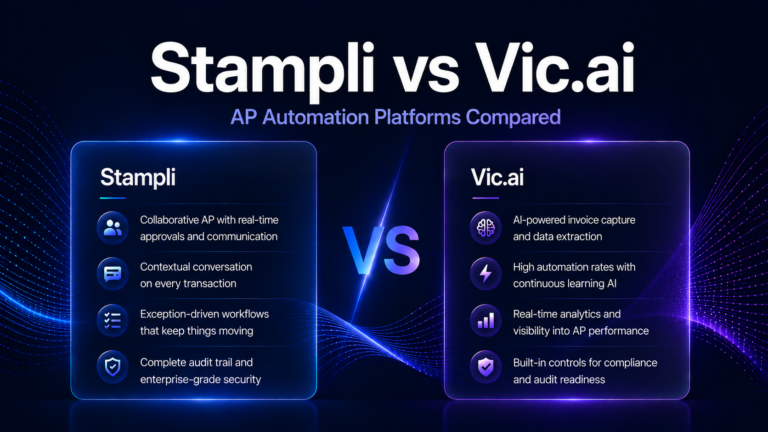
Top tool for this use case: Tipalti for SOX-compliant role-based segregation across vendor management, invoice approval, and payment execution; Stampli for invoice-stage SOD with ERP-integrated access controls.
Ideal company profile: Every organization — but specifically those under SOX compliance, external audit, or those that have experienced an AP fraud incident that exploited insufficient access controls.
What Is Segregation of Duties in AP?
Segregation of duties (SOD) in accounts payable is the organizational and system-level design principle that prevents any single individual from having incompatible combinations of AP access rights. The three primary AP functions that must be segregated from each other are: vendor master management (creating and modifying vendor records), invoice approval (authorizing the obligation to pay), and payment execution (initiating the transfer of funds). When these three functions are controlled by the same individual — or can be performed sequentially without an independent checkpoint — the organization has a structural fraud vulnerability regardless of how trustworthy the individual appears to be.
SOD controls in AP systems are implemented through role-based access controls that define what each user role can do — create vendors, approve invoices, or execute payments — and system-enforced approval thresholds that prevent any approval action from being performed by the same individual who initiated the transaction. Modern AP automation platforms implement SOD through configurable permission frameworks that can be mapped to the organization’s specific role structure and authority limits.
SOD is closely related to audit trail automation (which documents that SOD controls operated correctly) and payment approval workflows (which are the primary enforcement mechanism for SOD at the payment execution stage).
The Business Case
The fraud prevention case for SOD controls is the primary driver. The Association of Certified Fraud Examiners (ACFE) documents that the single most common factor enabling occupational AP fraud — where an employee defrauds their own employer — is the absence of SOD controls that would have required a second individual to review or authorize the fraudulent transaction. In AP specifically, the combination of vendor creation access and payment execution access in a single individual is the classic enabler of fictitious vendor payment fraud. ACFE data shows that organizations with SOD controls detect fraud on average 18 months earlier and at significantly lower loss amounts than those without.
The SOX compliance driver is equally direct. SOX Section 404 specifically requires management to assess and document the effectiveness of internal controls over financial reporting, and SOD in AP is one of the most consistently tested controls in a SOX audit. Gartner notes that SOD deficiencies in AP — particularly the combination of payment initiation and payment approval in the same role — are among the most common material weaknesses identified in SOX initial compliance assessments. Automated SOD enforcement eliminates this finding systematically rather than managing it through policy and periodic access reviews.
APQC’s internal controls benchmarking shows that organizations with technology-enforced SOD controls in AP have materially lower audit finding rates on AP controls assessments than those relying on policy-only SOD with manual access reviews. The difference is that technology-enforced controls operate consistently on every transaction; policy-only controls depend on individual compliance that auditors cannot rely on without testing each transaction.
Common Challenges
Small team SOD constraints. In AP teams of one or two people, strict SOD enforcement creates operational bottlenecks — a single AP staff member cannot approve their own invoices, but there may be no second qualified individual available for routine approvals. This requires compensating controls (CFO or Controller approval for all AP transactions above a threshold) rather than eliminating the SOD requirement.
Emergency override temptation. When a payment is urgent and the designated approver is unavailable, pressure to override SOD controls “just this once” creates both a specific fraud vulnerability and a documented control bypass that auditors scrutinize. Emergency override procedures need to be designed as formal, documented exceptions rather than informal workarounds.
Shared login credentials. When AP staff share system logins — a practice that was common before cloud-based AP platforms made individual user accounts standard — SOD controls based on user identity are meaningless. Eliminating shared credentials is a prerequisite for meaningful SOD enforcement.
ERP and AP platform SOD misalignment. Organizations where the AP platform enforces SOD but the ERP does not — or vice versa — have a partial control that auditors may not accept as sufficient. SOD enforcement must be consistent across all systems through which AP transactions can be created or modified.
How Software Solves It
Modern AP automation platforms implement SOD through role-based permission frameworks that are configurable to the organization’s specific role structure. The vendor creator role cannot approve invoices; the invoice approver role cannot execute payments; the payment executor role cannot create vendors. These restrictions are enforced at the system level — they cannot be overridden without a formal access change that generates an audit record — which is categorically more reliable than policy-based controls that depend on individual compliance.
For small teams where strict role separation creates operational constraints, the platforms support compensating control configurations — for example, requiring dual approval from any two authorized individuals rather than designating specific approvers for specific invoice types. This satisfies the SOD requirement without creating approval bottlenecks when specific individuals are unavailable.
Best Tools For Segregation of Duties Controls
Tipalti provides the most complete SOD enforcement framework, with distinct role-based access controls for vendor management, invoice approval, and payment execution — and system-level enforcement that prevents role combinations that would create SOD conflicts. Its audit trail records every access grant, role change, and control override with user identity and timestamp. See our AP Automation Buyer Guide.
Limitation for this use case: Tipalti’s SOD controls are most complete within the Tipalti platform. For organizations where ERP access also creates SOD exposure — AP staff who can post journal entries in the ERP alongside their Tipalti payment access — the SOD design must address both systems, requiring coordination with the ERP access review process.
Stampli provides strong invoice-stage SOD controls through its role-based permission system, with configurable approval threshold rules that prevent self-approval and enforce multi-person authorization for amounts above defined thresholds. See the AP Automation Buyer Guide.
Limitation for this use case: Stampli’s payment execution SOD controls are less comprehensive than Tipalti’s. For organizations where payment authorization segregation — not just invoice approval segregation — is the primary SOD requirement, Tipalti’s payment-stage controls provide more complete enforcement.
BILL provides configurable user roles with distinct permissions for invoice creation, approval, and payment authorization, providing a workable SOD framework for small business AP environments. See the BILL Review 2026.
Limitation for this use case: BILL’s SOD controls are adequate for small business needs but lack the granularity, audit reporting, and SOX documentation quality required for formal controls assessments. The access review and SOD conflict detection capabilities are more limited than Tipalti’s, which reduces its suitability for compliance-driven SOD requirements.
Comparison Table
| Platform | Role-Based Access Controls | System-Enforced SOD | Override Documentation | SOD Conflict Detection | SOX Audit Trail Quality |
|---|---|---|---|---|---|
| Tipalti | Best-in-class | Yes | Strong | Strong | Best-in-class |
| Stampli | Strong | Yes (invoice stage) | Strong | Moderate | Strong |
| BILL | Moderate | Partial | Basic | Basic | Adequate (SMB) |
Implementation Considerations
SOD design must precede platform configuration. Before touching any system settings, document the three primary AP functions (vendor management, invoice approval, payment execution), list every individual who currently performs each function, and identify every combination of functions currently held by a single individual. This mapping defines both the current SOD gaps and the target state that the platform configuration must enforce.
Small team compensating controls should be formally documented. If your AP team is too small for strict role separation, design and document specific compensating controls — CFO approval for all payments above $X, monthly independent review of vendor master changes, quarterly SOD access review by the Controller — and have your external auditors review the compensating control design before your next audit cycle. Informal compensating controls are not audit-defensible; documented, operating ones are.
Access reviews should be scheduled as a recurring control. SOD controls that are correctly configured at implementation degrade over time as staff roles change, new users are added, and emergency access grants are not revoked. A quarterly user access review — confirming that current access assignments match the documented SOD design — is the minimum cadence for maintaining SOD control integrity.
Which Companies Need This?
Every organization that processes vendor payments needs some form of SOD control — the scale and formality of the control design scales with company size and compliance requirements, but the underlying principle applies universally. SOX-compliant companies have a formal requirement. All other companies have a fraud risk management argument that is equally compelling given the documented prevalence and cost of AP fraud that SOD controls prevent.
Frequently Asked Questions
What are the three key functions that must be segregated in AP?
The three primary AP functions requiring segregation are: (1) vendor master management — creating or modifying vendor records and banking details; (2) invoice approval — authorizing the liability and approving invoices for payment; and (3) payment execution — initiating the transfer of funds. No single individual should have the ability to perform all three functions without independent review at each step. In smaller organizations, compensating controls can substitute for strict role separation when team size prevents full segregation.
How does SOD enforcement differ between AP platforms and ERPs?
AP platforms enforce SOD within their own transaction workflows — invoice capture, approval routing, payment authorization. ERPs enforce SOD within posting, journal entry, and bank reconciliation functions. Organizations with both systems need SOD design that addresses potential conflicts across both — for example, an AP staff member who approves invoices in the AP platform but also has journal entry access in the ERP. Complete SOD assurance requires coordinating access controls across all systems through which AP transactions flow.
Final Recommendation
SOD controls are not optional — they are the foundation of every other AP control. Tipalti provides the most complete technology-enforced SOD framework for mid-market and enterprise environments. Start with SOD design — the documented role matrix and access policy — before configuring any platform. The platform enforces the design; the design must be deliberately built first. Compensating controls for small teams should be formally documented and auditor-reviewed. See our Best AP Automation Software guide for complete platform evaluations.